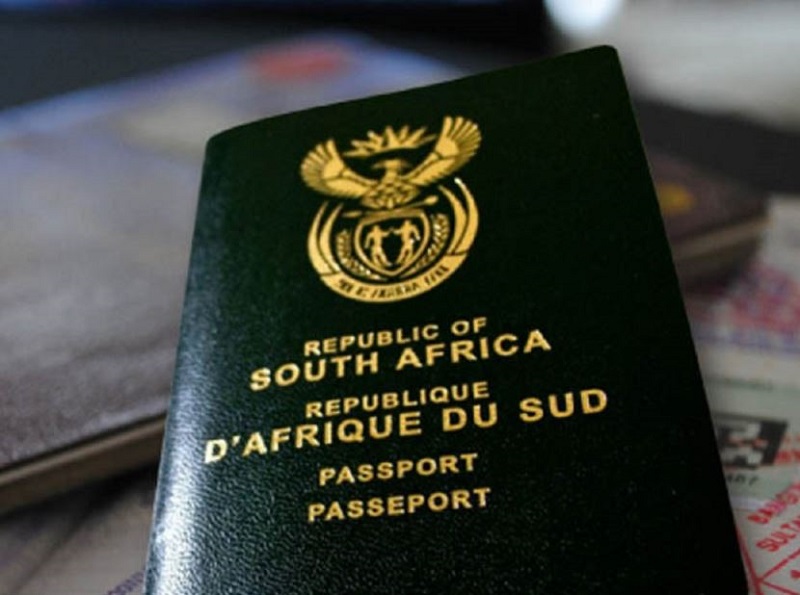
The moment you enter South Africa, customs officials will be nearby and ready to inspect your luggage. If you are not certain as to what to do when you cross paths with them, don’t worry, our customs guide will help put you at ease.

Travellers to South Africa are able to bring two-litres of their favourite wine without the need to pay duty or value-added tax. (Image: Brand South Africa)
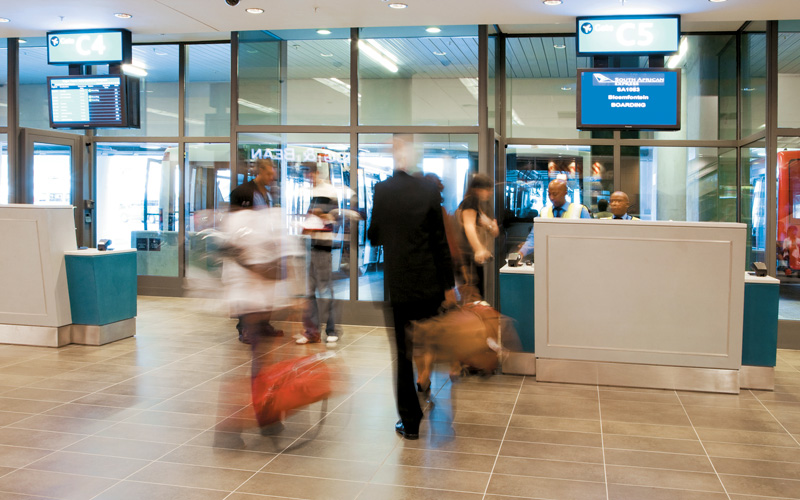
Whether you arrive in South Africa by air, sea or land, you have to pass through customs control, where you may be questioned and your baggage may be scanned or searched for dutiable, restricted or prohibited goods.
On arrival, travellers with goods to declare must complete a Traveller Card and make a verbal declaration of their goods to a customs officer, who will then generate a Traveller Declaration (TRD1).
If you’re found with undeclared, restricted or prohibited goods, you could be fined or even face prosecution. To help you avoid this, and make your arrival in and departure from South Africa as smooth as possible, here’s a quick guide to moving goods in and out of the country.
Note: This information serves as a guide only. It remains subject to change without notice. If you are in any doubt as to whether the goods you intend to bring into South Africa are restricted, contact your nearest South African embassy or high commission abroad (see links in box on right).

You can bring the following goods into South Africa without paying customs duty or value added tax (VAT):
Consumable goods in accompanied baggage:
People under 18 can claim this duty-free allowance on consumable goods – with the exception of alcohol and tobacco products – provided the goods are for their personal use.
Medicines: You are allowed to bring in one month’s supply of pharmaceutical drugs or medicines for your personal use. Any other pharmaceutical drugs or medicines must be accompanied by a letter or certified prescription from a registered physician, and have to be declared.
Personal effects, sport and recreational equipment: You can bring in personal effects, sport and recreational equipment, either as accompanied or unaccompanied baggage, for your own use during your visit.
In the case of very expensive articles, you may be required to lodge a cash deposit to cover the potential duty/tax on their re-export. The deposit will be refunded on departure after a customs officer has inspected the items and verified that they are being re-exported.
Handmade articles for commercial purposes: Travellers from Southern African Customs Union (SACU) or Southern African Development Community (SADC) member states are allowed to bring into South Africa handmade articles of leather, wood, plastic, or glass if the goods do not exceed 25 kilograms in total, without the payment of duties and taxes.
Additional goods: In addition to the personal effects and consumables duty-free allowances, you are allowed to bring in new or used goods in accompanied baggage to the value of R5 000, or R25 000 if arriving from Botswana, Lesotho, Namibia or Swaziland.
Once the above limits are exceeded, all goods brought into South Africa are subject to the payment of customs duty and value added tax (VAT) – including goods bought duty-free on aircraft or ships or in duty-free shops.
For goods of up to R20 000 in value, you have the option of paying customs duty at a flat rate of 20%. Flat-rated goods are also exempt from payment of VAT. This is valid only once per person per 30-day period.
People under 18 can opt for the flat-rate assessment, provided the goods are for their personal use.
Once you’re over the additional R20 000 limit – or if you waive the flat rate option – then duty will be assessed and paid on each individual item you’re carrying, and an additional 14% VAT will be charged.
Goods that do not qualify for the flat-rate assessment include:
Certain goods are restricted, and may only be brought into South Africa if you have the necessary authority or permit, and these must be declared on arrival. They include any firearms, as well as:
Currency: South African bank notes in excess of R25 000; foreign currency above $10 000; gold coins; coin and stamp collections; and unprocessed gold.
Endangered plants and animals: Species of plants or animals that are listed as endangered, whether they are alive or dead, as well as any parts of or articles made from them.
Food, plants, animals and biological goods: All plants and plant products, such as seeds, flowers, fruit, honey, margarine and vegetable oils. Also animals, birds, poultry and products thereof, such as dairy products, butter and eggs.
Medicines: You are allowed to bring in one month’s supply of pharmaceutical drugs or medicines for your personal use. Any other medicines must be accompanied by a letter or certified prescription from a registered physician, and have to be declared.
It is illegal to bring the following goods into South Africa:
If you’re in any doubt about the goods you want to bring into South Africa, contact your nearest South African Embassy or High Commission abroad or the nearest SARS customs office.
You can avoid problems by making sure that you:
Remember, failure to declare goods, under-declaration of the value of goods, or production of false receipts or invoices could lead to the seizure of your goods as well as criminal prosecution or fines of up to three times the value of the goods.
Travellers in transit to countries outside the Southern African Customs Union (SACU), which comprises Botswana, Lesotho, Namibia, South Africa and Swaziland, do not have to comply with customs formalities in South Africa.
This applies only if you have been booked from an airport outside the SACU, and you are not travelling to your final destination by road. These passengers may not leave the transit area of the airport between flights. Their baggage will automatically be transferred from their international flight.
Note, however, that customs officials may still search travellers in transit and their baggage for any illegal drugs or counterfeit goods. Anyone found with such goods will be detained and handed over to the police for prosecution.
Customs duties and taxes are payable in South African rand. Payment can be made in cash, by credit card or by means of traveller’s cheques.
Should you have any questions or doubt about the amount of duty paid or payable, or any other matter about your dealings with a customs official, you should take the matter up with the senior customs officer in charge. The receipt you obtain from Customs must be given to the officer dealing with your enquiry.
Value added tax (VAT) at a rate of 14% is levied on the purchase of most goods in South Africa. As a foreign visitor you may apply for a refund of the VAT you pay while in the country – provided you apply before you depart.
To apply, make sure you get tax invoices for your purchases. Then present these to the VAT Refund Administrator at your point of departure. If he/she is not available, present your goods to a customs officer, who will inspect the goods, stamp your invoices and deliver them to the VAT Refund Administrator, who will correspond with you on the matter.
Currency brought into or taken from South Africa is monitored by law. Should you have more than R25 000 in South African currency or $10 000 or the equivalent thereof in foreign currency, this must be declared.
As a foreign visitor, you can bring in up to R25 000 in South African currency (rands), plus an unlimited amount in foreign currencies and traveller’s cheques, provided you declare this on arrival.
On departure, you can also take out R25 000 in South African currency (rands), and up to the amount in foreign currencies and traveller’s cheques that you declared when you arrived – provided you didn’t stay for more than 12 months.
Please note that you may be required to lodge a cash deposit to cover the potential duty/tax on expensive articles if you are bringing them in on a temporary basis. The deposit will be refunded when you leave after a customs officer has physically inspected the items and verified that the goods are being re-exported.
Visitors must notify the Customs office where the deposit was lodged at least two days before you leave to ensure that the refund is ready. You will find the office number on the documents which will be given to you when paying your deposit.
If you are leaving from a port other than the port where you lodged the deposit, the inspection report confirming the re-exportation of the items will be forwarded to the office where the deposit was lodged and a cheque will be posted to the address that you provided.
If you are bringing goods into the country specifically for a conference such as pamphlets, brochures and banners, you need to do the following:
Source: South African Revenue Service
Reviewed: October 2015
Would you like to use this article in your publication or on your website? See Using Brand South Africa material
Copyright Brand South Africa © 2025. All rights reserved - Reengineered by Pii Digital