South Africa’s Democratic strength lies in its transparency
The Corruption Perceptions Index (CPI), published annually by Transparency International is the leading global indicator of public sector corruption, ranking 180 countries or territories by perceived levels of corruption (0=highly corrupt, 100=clean). The CPI focuses on corruption in the public sector, specifically the abuse of entrusted power for private gain, such as bribery, embezzlement, and nepotism. This index acts as a reputational benchmark for foreign investment, signals political stability, and highlights the effectiveness of governance and rule of law.
Since 1995, Transparency International has annually released the Corruption Perceptions Index (CPI) to provide a comprehensive and important benchmark of public service integrity across the globe. The 2026 report now finds that for the first time in over 10 decades, the global CPI average declined to 42/100 with over two thirds (68 per cent) of countries falling below a global average of 50 per cent, pointing to serious corruption challenges in most parts of the world. Categorically, the global analysis highlights that 31 countries improved, 50 countries declined, and 100 countries stayed the same. A comparative analysis into South Africa’s performance against the global trend indicates that over the past 3 years, South Africa’s ranking in the annually released reports remained stagnant at 41/182 countries, demonstrating relative stability and gradual improvement compared to the ongoing fluctuations in ranking and scores of other countries.
Why transparency can boost Democracy and investment
The recent release of the 2025 Corruption Perceptions Index (CPI) by Transparency International has once again placed South Africa under scrutiny. With the country’s score remaining below the global average of 42 out of 100, headlines have focused on stagnation and persistent concerns around corruption.
Focusing solely on the score risks misses a far more important story, which is one of democratic resilience, institutional maturity, and a nation that confronts its challenges openly and transparently. Reducing this broader narrative to a single index creates a mismatch between perception and reality.
South Africa is one of the few countries in the world that has subjected itself to intense public scrutiny through formal, transparent processes. The work of the Judicial Commission of Inquiry into allegations of State Capture has been broadcasted live, examined in detail, and rigorously documented. It laid bare systemic weaknesses while also reinforcing a critical point: wrongdoing will not be tolerated nor shielded in South Africa, it will get exposed and wrong doers persecuted.
How does transparency strengthen South Africa’s Democracy?
The very visibility of these processes contributes
to the Nation Brand’s perception metrics. When corruption is uncovered and prosecuted in the open, it can temporarily affect how a country is perceived, but that transparency is also evidence of a system that is in operation.
Over the recent years, the South African government has actively undertaken substantive initiatives, including strengthening prosecutorial capacity, enhancing public financial oversight, advancing procurement reforms, and the implementation of the National Anti-Corruption Strategy to overcome existing challenges in the public sector relating to corruption. Additionally, recent investigations and implemented accountability processes into various public institutions demonstrate that the government is taking corrective action to hold officials into account.
While the 2025 Consumer Price Index (CPI) findings highlight areas of both continued improvement and decline. South Africa’s ranking affirms that the country’s institutions remain independent, operational, and capable of addressing systemic challenges.
What is the country doing to fight corruption?
Central to South Africa’s democratic strength is its independent judiciary. The country’s courts have repeatedly demonstrated their willingness to act without fear or favour. Retired judges such as Mbuyiseli Madlanga exemplify a legal culture grounded in constitutional supremacy, accountability, and human rights.
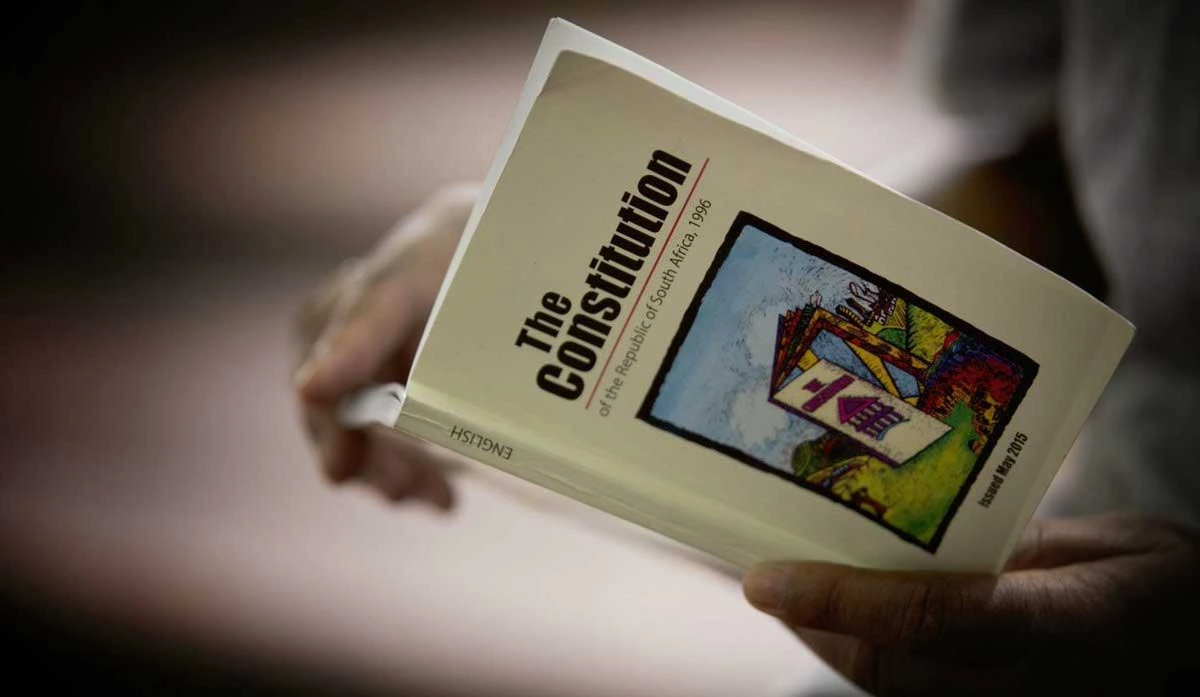
The court’s intervention and rulings have reaffirmed that no individual regardless of political or economic influence is above the law. This is not the hallmark of a failing state; it is the hallmark of a constitutional democracy functioning as designed. This also comes at a time that South Africa is celebrating 30 years of the establishment of its Constitution. Signed into law in 1996, the South African Constitution is widely regarded as one of the world’s most progressive, due to its transformative nature placing human rights, dignity, and equality at the forefront to remedy the injustices of apartheid. It is the supreme law, featuring a determinable Bill of Rights that protects not only civil liberties but also socio-economic rights.
This process also signifies the extent of South Africa’s free and fearless media capabilities supported by public discourse. South Africa’s media landscape remains one of the most free, vibrant and independent on the continent. Investigative journalists continue to uncover complex corruption networks, reinforcing transparency and strengthening governance outcomes. A free press is often uncomfortable for those in power, but it is invaluable for investors, citizens, and global partners who seek institutional stability.
What changes show progress in procurement, policing, and ethics?
The current phase of governance reform reflects acceleration, not stagnation. Across the public sector, strengthened procurement oversight mechanisms are tightening accountability, closing long exploited loopholes, and reinforcing transparent spending practices. Institutional rebuilding within key law-enforcement agencies is restoring credibility and operational capacity, while a renewed emphasis on ethical leadership is reshaping the tone at the top of government and state-owned entities.
What distinguishes this moment is not merely the exposure of corruption, but the resolve to act decisively in its aftermath. Investigations are increasingly followed by policy reform, enforcement improvements and structural safeguards designed to prevent recurrence. Oversight institutions are being capacitated, internal controls modernised, and consequence management sharpened.
This is the mark of a maturing democracy, where wrongdoing is confronted publicly, institutional weaknesses are acknowledged, and reforms are implemented to strengthen the system. Corruption exposure today is being followed by structural reform tomorrow. That trajectory matters.
The exposure of corruption through commissions of inquiry, court judgments, and rigorous investigative journalism should not be read as evidence of national decline or a nation under siege. This reflects the strength of South Africa’s democratic institutions that are prepared to confront wrongdoing openly rather than conceal it. Processes such as the Judicial Commission of Inquiry into Allegations of State Capture and decisive rulings by the Constitutional Court of South Africa, underscore a commitment to accountability and the rule of law.
A Nation Brand is not built on the illusion of flawlessness, but on credibility, transparency, and resilience. South Africa’s willingness to acknowledge shortcomings and act decisively, will in the long run make the country brand to emerge stronger through reform and openness.
Copyright Brand South Africa © 2025. All rights reserved - Reengineered by Pii Digital