
There are 23 daily and 14 weekly major urban newspapers in South Africa, most published in English. There are also a number of regional and community newspapers, most delivered free of charge, as well as a range of general and specialised news websites.
Some 12.4-million South Africans buy the urban dailies, while community newspapers have a circulation of 5.5-million.
Sections in this article:
South Africa has always had a courageous and opinionated press. For over 40 years the apartheid state tried to gag the country’s newspapers, using legislation, harassment and imprisonment, culminating in the late-1980s States of Emergency. Through all of this, South Africa’s press continued to report on all the news they could.
With democracy in 1994, South Africa’s newspapers were freed from all restrictions. The country’s Constitution, adopted in 1996, explicitly protects the freedom of the press in its Bill of Rights. Section 16 states:
Everyone has the right to freedom of expression, which includes –
The right in subsection (1) does not extend to-
Reporters Without Borders ranks South Africa at 38 in its 2010 Press Freedom Index. This puts the country ahead of France (44), Italy (49), and the US (99).
The development of the South African press since the end of apartheid has shown two significant trends: the stagnation and decline of the traditional mainstream newspapers, and the phenomenal growth of papers with a black, working class readership.
The stagnation of South Africa’s mainstream press, which traditionally had a wealthy white readership, mirrors the trend in established newspapers in developed countries across the world. This stagnation is generally attributed to the growth of the internet since the dotcom crash of 2001, with more and more of those who can choosing to find their news online instead of on the printed page.
On the other hand the opposite trend, the remarkable growth of newspaper readership in the lower end of the market, is a phenomenon seen in developing countries such as India and China. This is due to the vast improvement in the living standards in South Africa’s poorest communities, the major beneficiaries of change in this country. Their living conditions and general standard of living changed almost overnight as access to housing, electricity, running water, job opportunities and minimum wages came sweeping through under a new democratic government.
In this vast new readership one paper stands out: Daily Sun. Launched in 2002 to fill the enormous gap in the newspaper market, this tabloid has seen its circulation rise from 78 000 in its first year to 513 291 in the first quarter of 2009 – and that is just copies sold. Its readership has increased from under half a million to 5-million for the period between January and December 2010 (South African Advertising Research Foundation).
Daily Sun’s success has led to an increasing “tabloidisation” of South Africa’s newspaper industry, with a number of new tabloids being launched. These include the Afrikaans-language Son and English-language Daily Voice, both targeting working class coloured and, to a lesser extent, white readers in the Western Cape.
Note:
Beeld
Beeld is an Afrikaans-language daily, printed six days a week and distributed in Gauteng, Mpumalanga, Northern Province and KwaZulu-Natal. First published in 1974, the paper is owned by Media24.
Die Burger
Afrikaans-language daily Die Burger, first published in 1915, is the biggest daily newspaper in the Western Cape, with separate editions for the Eastern and Western Cape. The paper is owned by Media24.
Business Day
As its name suggests, Business Day is a dedicated business newspaper, reporting on corporate news, black economic empowerment, economic policy, corporate governance and financial markets. It is owned by BDFM Publishers, a division of Avusa, and Avusa’s partner, London-based Pearson Plc.
Business Report
Launched in 1995, Business Report is South Africa’s second financial daily, edited in Johannesburg but printed in three cities. It is inserted in all Independent Newspapers’ morning titles in Johannesburg, Cape Town, Durban and Pretoria.
Cape Argus
Independent Newspapers’ Cape Argus is an afternoon daily aimed at middle- to upper-income readers in Cape Town. Its readership consists of all races.
Cape Times
Independent Newspapers’ Cape Times, a daily published since 1876, aims at the middle classes of Cape Town. It has a mainly white and coloured readership.
The Citizen
The Citizen is published six days a week and distributed mainly in Gauteng. The newspaper is owned by CTP/Caxton.
Daily Dispatch
The first issue of the East London Daily Dispatch was published in 1898. The newspaper is the Eastern Cape’s biggest selling daily, with a Xhosa and English supplement published on Wednesdays. The Dispatch was edited by Donald Woods from 1965 until his arrest and banning in 1977 for exposing government responsibility for the death of Steve Biko. It is owned by Avusa.
Daily News
Independent Newspapers’ Daily News, first published in 1878 as the Natal Mercantile Advertiser, is targeted at the middle market of Durban and the rest of KwaZulu-Natal.
Daily Sun
Daily Sun is by far and away the largest newspaper in South Africa, and the first aimed at the black working class. A tabloid initially met with disdain by the established press, its huge sales – and the fact that it has made new newspaper readers out of millions of South Africans – have earned it respect. It offers more local news and gossip, focusing on events in ordinary people’s lives rather than national and international news.
Daily Voice
The Daily Voice, an Independent Nespapers publication, is a tabloid aimed mainly at blue-collar workers of the Cape Flats. With its pay-off line “sex, scandal, skinder (gossip) and sport” the newspaper is unashamedly a South African take on UK tabloids such as the Sun. It is published in English – with plenty of Afrikaans slang thrown in – and was launched to compete with Son, Media24’s successful Afrikaans-language tabloid.
Diamond Fields Advertiser
Established in 1878, Independent Newspapers’ Diamond Fields Advertiser is based in Kimberley and targets the communities of the sparsely populated Northern Cape.
The Herald
Founded in 1845 as the Eastern Province Herald, the Herald is one of South Africa’s oldest newspapers. Its first edition – four pages – came out on 7 May 1845 and cost one penny. The Herald is owned by Avusa and distributed in the Eastern Cape, with its main base in Port Elizabeth.
Isolezwe
Isolezwe is the premier isiZulu newspaper, published Mondays to Fridays. The paper has also launched the first Zulu-language website in the world. It is owned by Independent Newspapers.
The Mercury
The Mercury, published since 1852, is Durban’s morning newspaper. It is owned by Independent Newspapers. Its readership is 47% white, 18% black and the rest coloured and Indian.
New Age
Launched in December 2010, the New Age is a daily national newspaper published by TNA Media. The online version launched earlier, in September of the same year. The New Age is pro-government, but is said to have no formal ties with any political party. It’s also claimed to be “constructively critical”, according to former Minister in the Presidency Essop Pahad.
Pretoria News
Pretoria News, first published in 1898, is Independent Newspapers’ daily in the capital city. Mainly sold in Gauteng, it is also distributed in Mpumalanga and North West. Some 65% of its readers are black and 33% white.
Son
The world’s first Afrikaans tabloid, Son emulates British papers such as the Sun, focusing on scandal, gossip, entertainment and sport – and page three girls. The paper appears in four regional editions: Western Cape, Eastern Cape, Northern Cape and the central South African region. In the Western Cape province, it appears as a daily; in other provinces, it is a weekly paper. Son is owned by Media24.
Sowetan
Sowetan is Daily Sun’s main competition, also aimed at an English-literate black readership. Initially distributed as a weekly free sheet in Soweto, the paper was transformed into a daily in 1981 to fill the void left by the Post, which was deregistered by the apartheid government. Sowetan is owned by Avusa.
The Star
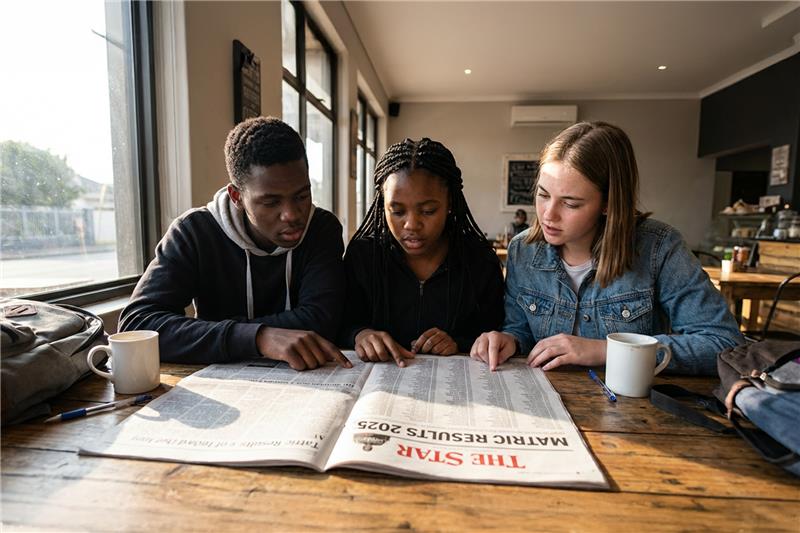
The Star is published in Johannesburg and distributed throughout South Africa, with most sales in Gauteng. Once aimed exclusively at the white market, today over 50% of the Star’s readers are black. It is owned by Independent Newspapers. Launched in Grahamstown in the Eastern Cape in 1887 as the Eastern Star, the paper moved to Johannesburg in 1889.
The Times
The Times was launched in 2007. The sister paper to the Sunday Times, it has a unique and experimental form of circulation: it is not available for sale, but rather is distributed free of charge to the Sunday Times’s 127 000 subscribers, from Monday to Friday. In tabloid format, it carries news that can be read in 20 minutes. It ties heavily into the Times website, providing additional content such as blogs, podcasts and video online.
Volksblad
First published in 1904, Volksblad is the oldest Afrikaans daily in the country and the largest in the Free State and Northern Cape. It is owned by Media24.
The Witness
South Africa’s oldest newspaper, the Witness, serves English readers throughout KwaZulu-Natal, with most of its readers in greater Pietermaritzburg and inland KwaZulu-Natal. Owned by Media24, it was formerly known as the Natal Witness.
Note:
City Press
First published in 1982 as Golden City Press, City Press is aimed at the black market. Its name was changed in 1983 by its owners, Jim Bailey and the South African Associated Newspapers. Media24 acquired the paper in 1984. It is published on Sundays.
Independent on Saturday
The Independent on Saturday caters for the KwaZulu-Natal market. It is published by Independent Newspapers. Its readership is 47% Indian, 33% white and 15% black.
Isolezwe nge Sonto
Launched on 30 March 2008, the newspaper is the Sunday edition of the daily distributed Isolezwe. Its first ABC quarter figures proved it to be very popular in Durban. It is a tabloid targeted at the Zulu-speaking middle class market in Kwazulu-Natal, and is owned by Independent Newspapers.
Mail & Guardian
Mail & Guardian, formerly the Weekly Mail, was established in 1985 at the height of resistance to apartheid. When foreign donor funding started drying up for anti-apartheid organisations in the late 1980s, many of the country’s alternative newspapers – notably Grassroots, South, New African and New Nation – folded. The Weekly Mail, however, struck up a partnership with the Guardian of London, ensuring the paper’s continued existence. Today, Zimbabwean entrepreneur Trevor Ncube’s company, Newtrust Company Botswana Limited, has a majority share of 87.5% in Mail & Guardian, with the Guardian holding a 10% stake.
Post
Post was launched in the mid-1950s as “a racy read, spiced with sex, soccer and news”. Targeted at the Indian communities of KwaZulu-Natal and Gauteng, it is owned by Independent Newspapers. Post is published on Wednesdays, with the leisure and sport Weekend Post appearing on Fridays.
Rapport
Rapport is South Africa’s national Afrikaans Sunday newspaper. It is distributed countrywide and in Namibia. Owned by Media24, Rapport has the biggest Afrikaans-language market penetration in South Africa.
Soccer Laduma
A specialist soccer newspaper published on a Wednesday, Soccer Laduma is aimed primarily at young lower-income black men – 87% of its readership is male. It is published by Media24.
Son
The world’s first Afrikaans tabloid, Son emulates British papers such as the Sun, focusing on scandal, gossip, entertainment and sport – and page three girls. The paper appears in four regional editions: Western Cape, Eastern Cape, Northern Cape and the central South African region. It is owned by Media24 and published on Sundays3.
Sunday Independent
The Sunday Independent was established in 1995 and aims at readers in the higher-income bracket. Its main sales are in KwaZulu-Natal, Gauteng and the Northern Cape. Its readers are 47% black, 29% black, 11% coloured and 13% Indian. It is owned by Independent Newspapers.
Sunday Sun
Established at the beginning of 2002 and aimed at black readers, Sunday Sun publishes content .largely of a tabloid natur Much of its audience are first-time newspaper readers. Owned by Media24 and published by RCP Media, Sunday Sun is sold countrywide as well as in Botswana, Lesotho and Swaziland.
Sunday Times
Avusa’s Sunday Times is South Africa’s biggest Sunday newspaper, read by 3.8-million people. The paper includes Sunday Times Magazine, Lifestyle, Business Times and Metro sections. Established in 1906, the Sunday Times is distributed all over South Africa and in neighbouring countries such as Lesotho, Botswana and Swaziland.
Sunday Tribune
The Sunday Tribune caters for KwaZulu-Natal readers. Its is published by Independent Newspapers.
Sunday World
The Sunday World, launched in 1999, is a tabloid aimed mainly at black readers. Owned by Avusa, it is distributed in Gauteng, Mpumalanga, Limpopo and North West.
Weekend Post
Published on a Saturday, the Weekend Post is the major regional weekend newspaper in the Eastern Cape, with its core market in Port Elizabeth. It is owned by Avusa.
The Independent Newspaper group’s news portal. Full local and international news, plus sections on business, sport, property, careers, technology, travel and more.
Media24’s online news portal, in partnership with several newspapers such as Beeld, Die Burger, City Press and Rapport. Full local and international news, plus sections on business, sport, science, motoring and more.
One of the first news sites in Africa, this web companion for the weekly Mail & Guardian newspaper is updated daily with local, business and sports news, and features all the M&G’s insight and analysis, as well as links to The Teacher (the newspaper of the teaching profession), and more.
More than just business news here – the newspaper’s site provides local, world & sports updates, as well online financial calculators and personalised listings of JSE share prices via e-mail.
News site of the South African Broadcasting Corporation. Specialises in breaking news from South Africa and the world, and provides links to audio and video bulletins.
Die Burger’s site updates breaking news throughout the day. A comprehensive local and international news portal, with all the sections, specials, features and interactivity we’ve come to expect from South African news sites.
The Times is the sister publication to South Africa’s best-selling Sunday paper, the Sunday Times. Its approach is to blur the line between print and electronic media, serving up not only news, business and sport, but blogs, podcasts and plenty of video.
Independent Newspapers’ business site provides the top stories and features covering media, marketing and IT.
Media24’s business site contains breaking news, the latest financial indicators, company results and more.
Personal finance site pulling material from the Avusa stable. Updated regularly, providing the latest news, market reports, investment advice and a variety of handy online tools.
Independent investment information, news, features, analysis and resources.
Online features from the magazine. A search facility and archive of back issues makes this a handy business research resource.
Excellent, comprehensive, continually updating IT, Internet and technology news site.
Advertising and marketing news site.
Copyright Brand South Africa © 2025. All rights reserved - Reengineered by Pii Digital