Black economic empowerment (BEE) is not simply a moral imperative to redress the inhumane policies of apartheid. It is a pragmatic growth strategy to realise the country’s full potential by bringing the black majority into the economic mainstream.

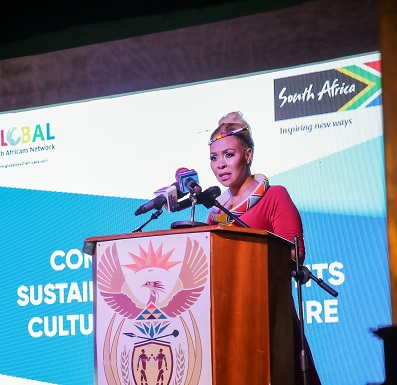
Broad-based black economic empowerment, or B-BBEE, is a strategy to ensure all South Africans are able to meaningfully participate in the mainstream economy. (Image: Brand South Africa)
In the decades before South Africa achieved democracy in 1994, the apartheid government systematically excluded African, Indian and coloured people from meaningful participation in the country’s economy.
“Our country requires an economy that can meet the needs of all our economic citizens – our people and their enterprises – in a sustainable manner,” the Department of Trade and Industry (DTI) says in its BEE strategy document.
“This will only be possible if our economy builds on the full potential of all persons and communities across the length and breadth of this country.”
Despite the many economic gains made in the country since 1994, the racial divide between rich and poor remains. As the DTI points out, such inequalities can have a profound effect on political stability:
“Societies characterised by entrenched gender inequality or racially or ethnically defined wealth disparities are not likely to be socially and politically stable, particularly as economic growth can easily exacerbate these inequalities.”
Black economic empowerment – or broad-based black economic empowerment, as it is technically known – is not affirmative action, although employment equity forms part of it. Nor does it aim to take wealth from one group and give it to another. It is essentially a growth strategy, targeting the South African economy’s weakest point: inequality.
“No economy can grow by excluding any part of its people, and an economy that is not growing cannot integrate all of its citizens in a meaningful way,” the DTI says.
“As such, this strategy stresses a BEE process that is associated with growth, development and enterprise development, and not merely the redistribution of existing wealth.”
Black economic empowerment is an important policy instrument aimed at broadening the economic base of the country – and through this, at stimulating further economic growth and creating employment.
The strategy is broad-based, as shown in the name of the legislation: the Broad Based Black Economic Empowerment Act of 2003. This reflects the government’s approach, which is to “situate black economic empowerment within the context of a broader national empowerment strategy . focused on historically disadvantaged people, and particularly black people, women, youth, the disabled, and rural communities”.
As the DTI notes, discrimination “is at its most severe when race coincides with gender and/or disability”.
Through its BEE policy, the government aims to achieve the following objectives:
The Broad-Based Black Economic Empowerment (B-BBEE) Codes of Good Practice emerged in 2007 to provide a standard framework for the measurement of BEE across all sectors of the economy.
The codes require that all entities operating in the South African economy make a contribution towards the objectives of BEE.
The first phase of the codes encourages all entities, public and private, to implement proper BEE initiatives through the issuing of licences, concessions, sale of assets and preferential procurement.
The second phase of the codes covers the seven components of the B-BBEE scorecard, namely: ownership; management control; employment equity; skills development; preferential procurement; enterprise development; and socioeconomic development (including industry-specific and corporate social investment initiatives).
The B-BBEE Act of 2003 makes the codes binding on all state bodies and public companies, and the government is required to apply them when making economic decisions on:
Private companies must apply the codes if they want to do business with any government enterprise or organ of state – that is, to tender for business, apply for licences and concessions, enter into public-private partnerships, or buy state-owned assets.
Companies are also encouraged to apply the codes in their interactions with one another, since preferential procurement will affect most private companies throughout the supply chain.
The codes of good practice allow foreign multinational companies that do business in South Africa some flexibility in how they structure their empowerment deals.
In particular, the B-BBEE Codes of Good Practice acknowledge that there may be multinationals whose global practices prevent them from complying with the ownership element of B-BBEE through the traditional sale of shares to black South Africans.
In such cases, the codes allow for contributions in lieu of a direct sale of equity. These contributions, known as “equity equivalent” contributions, count towards the ownership element of B-BBEE.
The value of these contributions may be measured against 25% of the value of a multinational’s South African operations, or against 4% of the total revenue from its South African operations annually over the period of continued measurement.
Foreign multinationals can submit proposals for Equity Equivalent Programmes to the Department of Trade and Industry for approval by the Minister of Trade and Industry.
Brand South Africa reporter
Sources: Department of Trade and Industry, the South Africa Yearbook
Reviewed: 19 April 2013
Would you like to use this article in your publication or on your website? See Using Brand South Africa material.
Copyright Brand South Africa © 2025. All rights reserved - Reengineered by Pii Digital