By Lethabo Mkhize
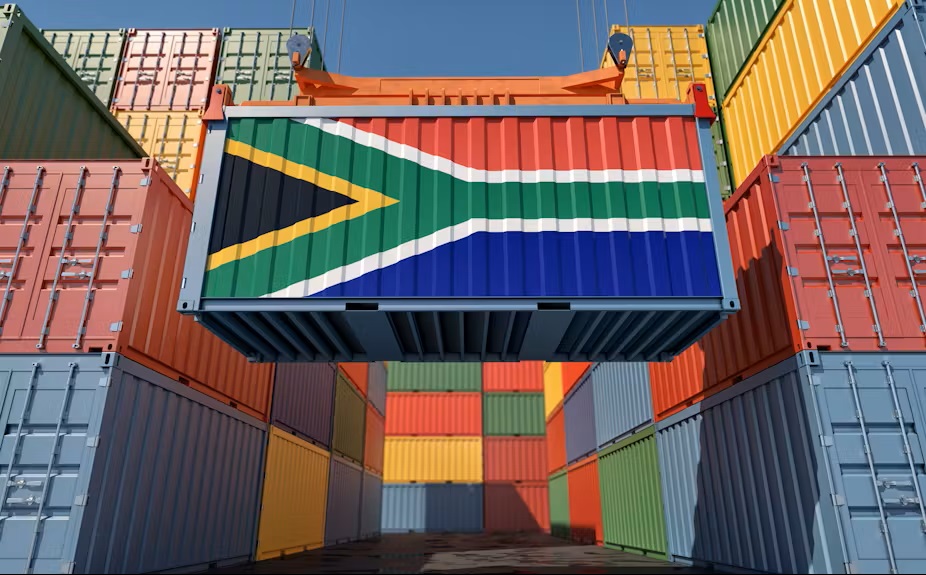
In the face of rising protectionism, South Africa is opting for measured dialogue with its third-largest export market, the United States. Trade Minister Parks Tau recently confirmed that there “is no intention of decoupling” from Washington, despite new U.S. import levies targeting South African goods. Instead, the country is actively seeking talks with U.S. authorities, submitting a detailed trade and investment proposal that spans energy (including LNG), agriculture, and critical minerals.
Crucially, the proposal underscores South Africa’s commitment to the African Growth and Opportunity Act (AGOA), with Tau calling for a unified African strategy ahead of the upcoming U.S.–Africa trade discussions.
Expanding a Global Trade Footprint
While deepening U.S. ties, South Africa continues to broaden its global trade architecture. Its trade strategy is anchored in a web of preferential agreements across five continents, positioning the country as a strategic entry point to African and global markets. Highlights include:
Beyond the region, South Africa has signed or is negotiating 13 trade and preferential agreements. These include its longstanding EU partnership (the Trade, Development and Cooperation Agreement, now under an EPA framework); a Free Trade Agreement with the European Free Trade Association (Iceland, Norway, Switzerland, Liechtenstein); and a preferential trade arrangement with the Mercosur bloc (Brazil, Argentina, Paraguay and Uruguay).
Strategic Trade Contingency Planning
In light of shifting trade dynamics, The Department of Trade, Industry and Competition (DTIC) has developed coordinated contingency plans across key ministries. A newly created “trade support desk” is central to this effort, designed to support vulnerable sectors through fast-track financing, market development, and targeted tariff relief.
Recent U.S. proposals, for example, seek to exempt shipbuilding and certain agricultural exports from potential tariff escalation, while protecting MSMEs with annual exports under $1 million. These support measures aim to shield local industries while maintaining investor confidence.
Africa’s Industrial Leader and Investment Climate
South Africa remains the most industrially advanced and economically diversified country in sub-Saharan Africa, with a GDP of $380–400 billion and contributing roughly 75% of SADC’s economic output. It is not only a regional powerhouse but a global player, sitting at the table with the world’s largest economies as a member of the G20 and a core voice in BRICS.
Its capital markets—including the Johannesburg Stock Exchange (JSE), one of the world’s top 20 exchanges by market capitalisation—offer foreign investors deep access to equity and debt instruments. The country also boasts a sophisticated domestic bond market, supported by a transparent legal system and well-regulated financial sector. These attributes enable investors to raise capital, list companies, and invest with confidence.
In terms of infrastructure, South Africa continues to outperform regional peers. Skytrax recently ranked OR Tambo International Airport, Cape Town International, and King Shaka International among the best airports on the continent, reinforcing the country’s logistics and tourism competitiveness.
Despite headwinds, these fundamentals continue to attract sustained investment. South African firms have invested $3.3 billion in U.S. industries alone (including mining and metal recycling), while multinationals such as Volkswagen, Stellantis, and Saudi Aramco are expanding operations in South Africa across automotive, energy, and petrochemicals sectors.
South Africa’s mix of industrial capacity, resource diversity, and institutional strength positions it as Africa’s premier trade and investment hub.
Copyright Brand South Africa © 2025. All rights reserved - Reengineered by Pii Digital