“I have walked that long road to freedom… I have taken a moment here to rest, to steal a view of the glorious vista that surrounds me, to look back on the distance I have come. But I can only rest for a moment, for with freedom comes responsibilities.”
— Nelson Rolihlahla Mandela
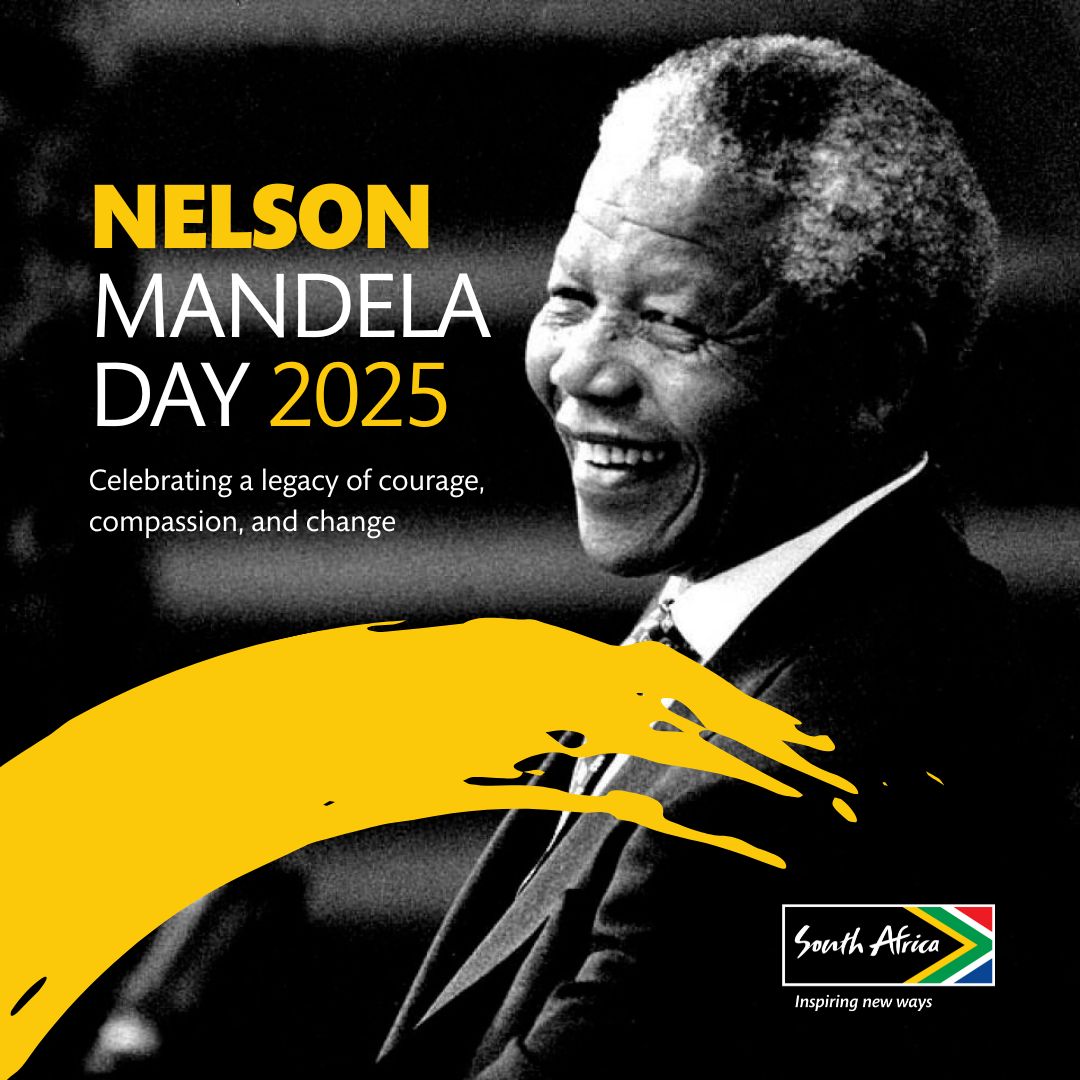
On July 18th, the world pauses to reflect on the life and legacy of Nelson Mandela, South Africa’s first democratically elected president and one of the 20th century’s most enduring symbols of justice and reconciliation. Mandela Day is more than a tribute to an individual; it is a call to action. Recognised by the United Nations in 2009, the day encourages people across the globe to devote 67 minutes of their time to community service — honouring the 67 years Mandela spent fighting for human rights and freedom.
Born in 1918 in the rural village of Mvezo, Mandela dedicated his life to the liberation of South Africa from racial segregation and systemic oppression. He spent 27 years in prison, most of them on Robben Island, for his role in the anti-apartheid struggle. Upon his release in 1990, Mandela led a negotiation process that defused civil conflict, ushered in a new Constitution, and paved the way for South Africa’s first democratic elections in 1994 – a moment that transformed the country and reshaped the global understanding of peaceful political transition.
Mandela’s presidency (1994–1999) was defined by efforts to reconcile a deeply divided nation and establish the foundations of democratic governance, human rights, and inclusive development.
This Mandela Day, South Africa marks over 30 years since the dawn of democracy. Across the nation, many honour not only the legacy of Nelson Mandela, but also the country’s enduring effort to build a society grounded in justice, equality, and shared progress.
The GNU: Revisiting the Spirit of Inclusive Governance
Following the 2024 national elections, South Africa entered a new chapter of coalition governance. With no single party commanding a majority, a Government of National Unity (GNU) was formed.
This development signals a maturing democracy, where collaboration becomes not only a political necessity but also a potential strength. The GNU can offer a framework for constructive engagement across political lines, reinforcing the idea that South Africa belongs to all who live in it.
The Transition: A Foundation, Not a Finish Line
The idea that South Africa’s transition was seamless is a convenient myth. The reality was far more complex. The early 1990s were marked by intense negotiations, political violence, and deep uncertainty. What sustained the transition was not only leadership, but also a shared national commitment to a better future.
Democracy, as Mandela often said, is a long road. It is built through institutions, policy, and public trust. And over the past three decades, many of those foundational institutions have been tested and in many cases, strengthened.
Programmes like Black Economic Empowerment (BEE) and its evolution into Broad-Based Black Economic Empowerment (B-BBEE) were among the key instruments of economic transformation. These policies have contributed to the emergence of a growing black middle class, expanded access to education, and increased participation in the formal economy. While challenges remain in implementation and outcomes, these frameworks represent an ongoing national effort to correct systemic imbalances.
Similarly, land reform remains an important aspect of redress. Framed in South Africa’s Constitution, it is not merely about ownership, but about equity, identity, and restoration. Over the years, the policy landscape has evolved to balance restitution with sustainability, aiming to support both social cohesion and agricultural productivity.
Across communities, citizens participate in acts of goodwill for Mandela Day in honour of his legacy. But Mandela Day also offers space for reflection. It invites us to ask: how far have we come in realising the vision of a more inclusive, equitable world? And how do we continue the work, not just symbolically, but structurally?
Mandela Day invites us not only to remember his personal sacrifice and global influence, but also to reflect on the unfinished work of building the society he envisioned: one rooted in dignity, justice, and opportunity for all.
Copyright Brand South Africa © 2025. All rights reserved - Reengineered by Pii Digital