26 May 2010
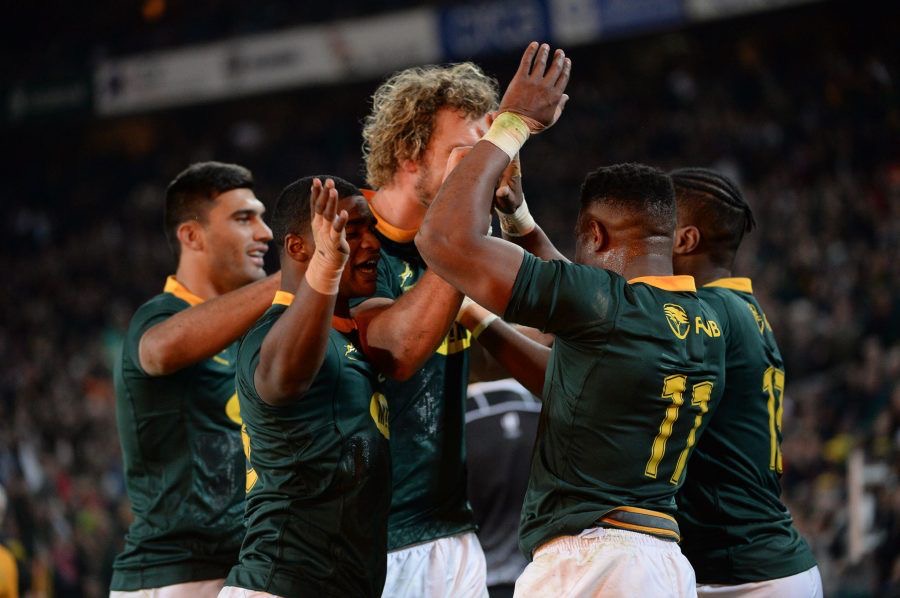
History was made on Saturday, 22 May when thousands of Pretoria’s Blue Bulls rugby fans poured into Orlando Stadium in Soweto – the township famous for its historic opposition to apartheid – and were welcomed with open arms and waving flags.
The Vodacom Super 14 semifinal showdown between the Bulls and New Zealand outfit the Crusaders would ordinarily have been played at Loftus Versfeld in Pretoria, but the Bulls’ home venue is unavailable for use in the lead-up to the 2010 Fifa World Cup.
Instead, the Bulls chose Orlando Stadium, which has been refurbished to the tune of R280-million and will serve as a training venue during the Fifa World Cup.
Judging by the reception they got on Saturday, the Bulls might consider making Soweto their second home.
Richie McCaw’s team must have wondered what had hit them. It was blue, for sure. But was it always this noisy? they must have wondered as thousands of vuvuzelas were added to the usual Blue Bull spectator mix.
The Crusaders have experienced the quirkiness of the typical Blue Bull fanbase in the past, but stirred up with the jingle of township life, on Saturday they experienced something new altogether – Johannesburg, Pretoria and Soweto came together to make noisy, South African history.
Joburg’s emergency management services were on hand but, with the crowds behaving and no emergencies to take care of, they added to the general din with sirens blazing and shouts of “Soweto loves the Bulls” over the fire engine sound system.
Never before had so many fans of a sport traditionally supported by white South Africans come in such numbers to a black township. People streamed into the area, making use of anything from funeral parlour buses to “kwela-kwela” vans – township lingo for a police truck transporting prisoners – as transport.
When congestion became too much, fans disembarked from buses and started walking, hailing transport with a desperate “taxi to Soweto”. Taxi drivers laughed heartily, hooting as they sped off in the opposite direction on their way to off-load passengers in the inner city.
“Wait, I am coming, baba [township slang for friend]. I am coming,” chuckled one driver to five desperate, blue-clad men running across the road.
“It is history. Really, really it is nice,” commented one taxi passenger. “It shows there is a change in South Africa.”
It was not long before shebeen owners along Klipspruit Road in front of the stadium ran out of Black Label quarts. And while a recording of South African pop singer Steve Hofmeyr belted out his unshaken love for the Bulls in the stadium, young and old alike, black and white – and for the most dressed in blue – made their way to their seats.
The Bulls beat the Crusaders by 15 points, with the final score 39-24.
Orlando Stadium will again host the Bulls fans on Saturday, 29 May when the team and the Stormers, from Western Cape, tackle each other in an all-South African Super 14 final.
The stadium has its roots strongly in Johannesburg’s football history. For 40 years it was the home of soccer before the then FNB Stadium – now Soccer City – was built in Nasrec Road, thereby unseating Orlando.
It was completely refurbished over two years and officially handed back to its fans in November 2008, one of several 2010 FIFA World Cup™ legacy projects initiated by the City of Johannesburg.
It is now the biggest and most sophisticated stadium in Soweto and can seat over 40 000. It will be used as one of the training venues for the football World Cup. Soccer City can accommodate about 90 000 spectators.
The City’s Bus Rapid Transit system, Rea Vaya, also makes its way from the inner city, past Soccer City to Orlando Stadium, before reaching its destination in Thokoza Park, making several stops along the way. It returns along the same route and is the main trunk route bus service between the inner city, Soweto and these two important stadiums.
Source: City of Johannesburg
Copyright Brand South Africa © 2025. All rights reserved - Reengineered by Pii Digital